Author
Mary Kaddis
Published
July 7, 2026
Tags
The first DOROT program I attended as a summer college intern was the Knit and Crochet Club. It kind of made sense; when I tell my friends I’m interning at a nonprofit for older adults, I think that’s the sort of thing they imagine. I was expecting a quiet, relaxing, social event. Cue the classical music! I was looking forward to socializing with a few participants but hoping it wouldn’t put me in a sleepy mood for my meetings later.
I was wrong. The group’s casual chatter intensified almost immediately to a meaningful conversation about which minorities in NYC were most in need of the items they were making. They knit in such volume they needed new groups to donate to, and each older adult had a social issue they felt uniquely passionate about. I learned about activist groups in NYC, like Rock the Block Foundation and Knit the Rainbow. I have never heard such a zealous, yet respectful, political discussion.
I wasn’t sleepy at all.
A few days later, I attended a watercolor workshop with professional artist Sal Sidner. Sal was determined to bring the very best out of every student. The class ranged from beginner to advanced watercolorists—Sal even deemed one woman “our expert”—but each one came with razor-sharp focus. By the end of the class, there was some more chatter as the students finished up their paintings. Neighbors traded advice, and Sal critiqued each finished piece for improvement. I felt like I was observing a class of artists in an art studio. I had forgotten we were in the DOROT auditorium, and that this was an event for older adults. The environment was centered on technique and improvement, rather than simply making art for fun.
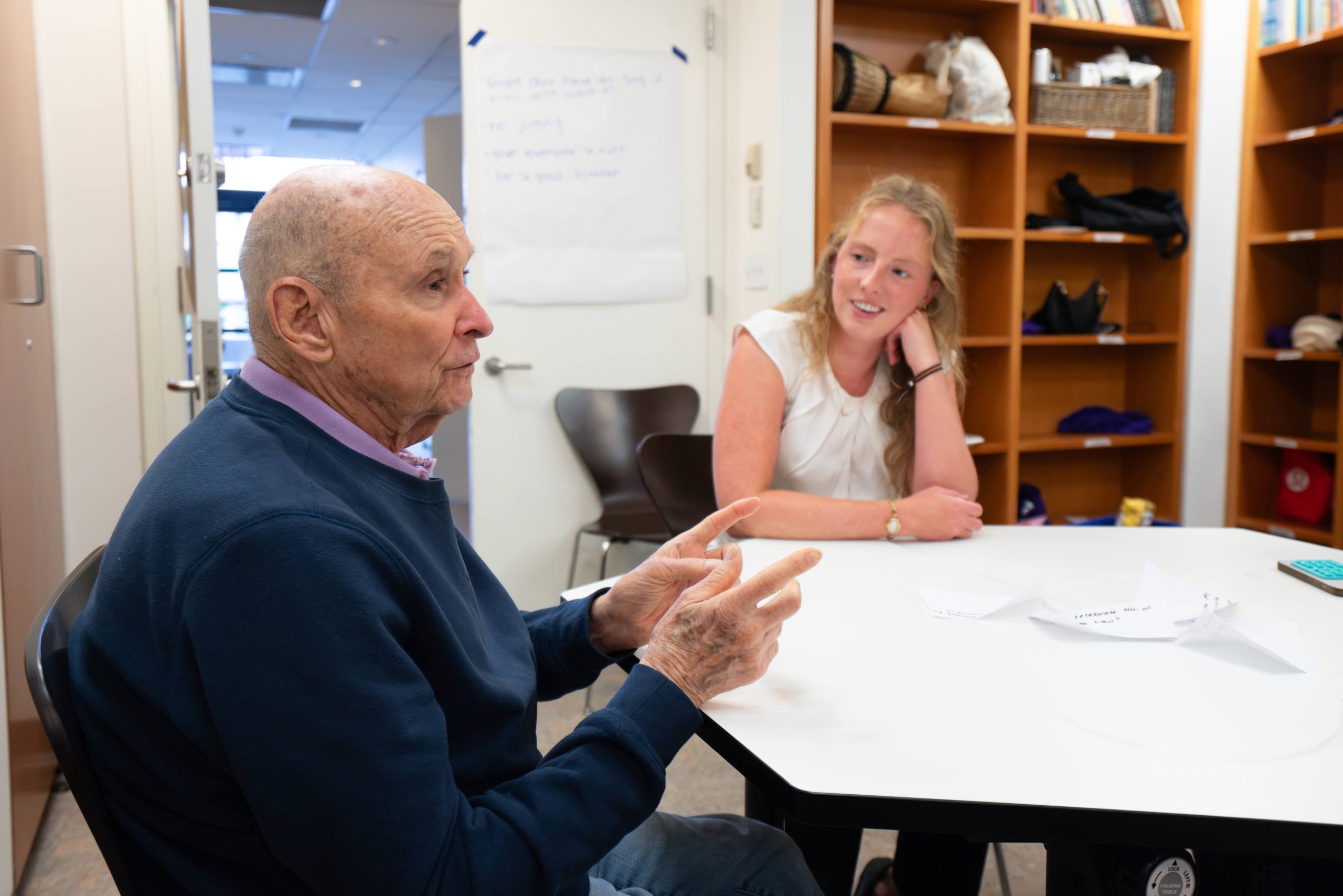
Most recently, I had the privilege of joining GrandLove, a support group for grandparents with grandchildren who are transgender. I must admit that before attending, I was skeptical about how accepting the group would be of change. After everyone was introduced, one of the first timers asked what “nonbinary” meant. I was impressed by her bravery, unashamed to admit she didn’t know something. Instead of simply defining the term, the group leader asked the other participants to offer their understanding. This eventually opened a conversation about the variability of what “nonbinary” looks like. As the class went on, all my skepticism faded. It was hard to imagine my peers having such an open and unashamed conversation, and I, again, seemed to forget I was at an event for older adults. Everyone approached the discussion with humility and curiosity—qualities I think we all need more of.
The energized and politically aware knitting group at 10 AM should have been my first sign: nothing is sleepy at DOROT. After each of these programs, I wasn’t simply impressed by the abilities of these older adults “considering their age.” Far from that. I left each program wishing my peers were more like them: brave, curious, and eager to learn.
Mary Kaddis is a summer college intern at DOROT.