Author
Shai Rosenfeld
Published
June 29, 2026
Tags
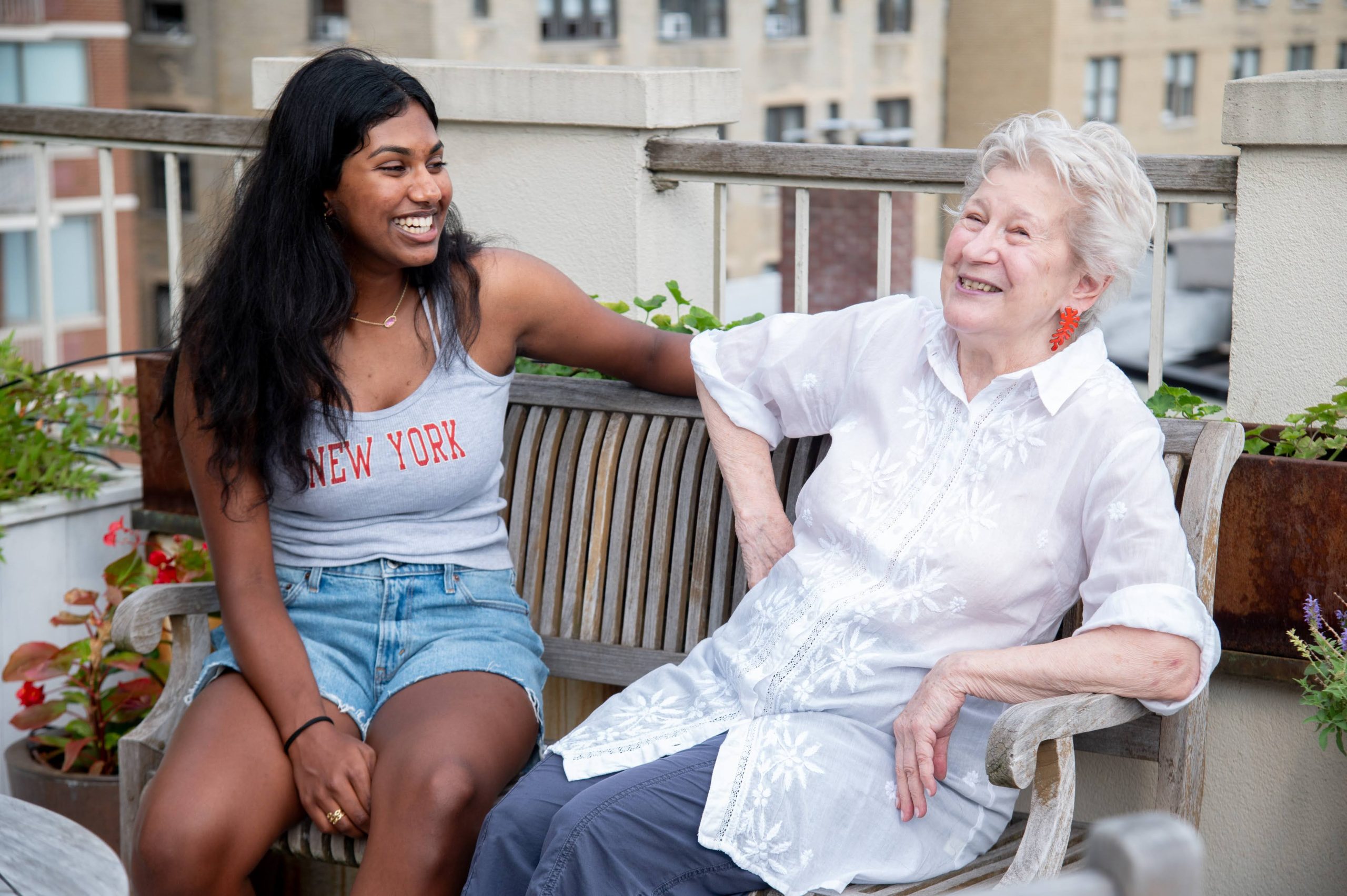
There is a certain magic that happens when teens and older adults come together and really connect. This kind of magic sometimes happens naturally, but creating an environment that ensures the best chances for people to form authentic bonds is a skill DOROT has honed over many years. One of the ways we particularly stand out is for the workshop model we’ve developed to foster intergenerational connections. (The summer months are chock full of these workshops, both in-person and online—learn more here.)
This model brings together teen volunteers and adult volunteers 65+ for three to seven weekly sessions of creative workshops involving theater, music, writing, discussion, visual art, storytelling, and more. (There are also one-time events for folks who want to give the programs a try.)
You may wonder: What makes a group of 12 – 25 older adults and teens open up and get to know each other? Here are the tenets that help us better facilitate meaningful and joyful interactions.
Younger or older, we are all partners in our mission
At the start of these programs, we ask everyone to be part of a community agreement acknowledging their role in these sessions: they are there to make connections and care for each other in how they speak and act. We are clear that this is not about youth helping adults or adults mentoring teens; rather, everyone is responsible for making intergenerational connections that benefit the entire group.
Framing is everything
There are a million good ways to run an activity. But the meaning people make of that activity depends on how it is framed. Framing is the way we present a prompt or instruction to a group. People engage very differently depending on how something is explained. For example, there is a big difference between saying: “Today our topic is music, turn to your partner and discuss,” and saying, “To start our conversation today let’s take a moment to think about a song that shaped our lives. Give me a nod when you have the song in mind. Great. Now think of a particular moment in which the song was meaningful to you. Let’s take a minute to think. You will now spend about four minutes in a group of four sharing your song and your moment. Make sure to hear from everyone before you ask questions or discuss.”
These are two ways to seemingly do the same thing, but your choice of framing will completely change the interaction.
We are also quite intentional about how we start and end each session, and we highlight the moments we want participants to notice throughout. Our intention, whatever the activity, is always geared toward generating personal connections and sharing. The topic of the workshop, be it art, history, or otherwise, is only in service of the main goal—connection.
Keep it personal
Not all of our workshops require personal testimony but for many, success is contingent on participants feeling comfortable enough to open up and share personal stories.
Adults and teens are inclined to tread a bit carefully when first encountering each other—after all, they’re in a new environment meeting people they don’t usually spend time with. But with the right guidance and program structure, this initial hesitance can be an advantage, leading participants to listen more deeply to each other and to speak with thoughtfulness and care.
That kind of exchange is central to our approach, because we are not trying to teach content but to build relationships. Content is a good starting point for meaningful connections, but our goal is to create an experience, not offer a class. We want to help participants learn from each other, so rather than drawing out opinions, we seek personal reflections and stories.
A successful workshop is one in which participants felt heard and felt that others were comfortable opening up to them.
It’s not a classroom
For both teens and adults, a workshop setting can feel a lot like a classroom at first. There is an expectation that the “teacher” will provide information, and everyone else will respond. For many people, not only is the intergenerational experience something new, so is the idea of a truly interactive space. They are used to either structure or interaction, but not both at the same time.
Our approach is to speak as little as possible so that most of the time is spent on participants making connections in small groups. Questions will come up and we leave space for them, but we’ve found that sometimes it’s better to respond, “Why don’t you try! Whatever you understood is great.” We want to create the feeling that the specific instruction is less important than our shared goal of making connections.
It is also important that we allow participants to lean on each other. Rather than maintaining a hierarchical relationship with the facilitator in which all instructions come from one person, participants can build something together.
It’s this experience—of sharing with one another, listening to each other, and exploring something together—that creates the magic I mentioned above. Except it’s really not magic—it’s simply the joy of human connection.
Shai Rosenfeld is DOROT’s Director of Intergenerational Program Engagement.