Author
Judith Turner
Published
March 20, 2026
Tags
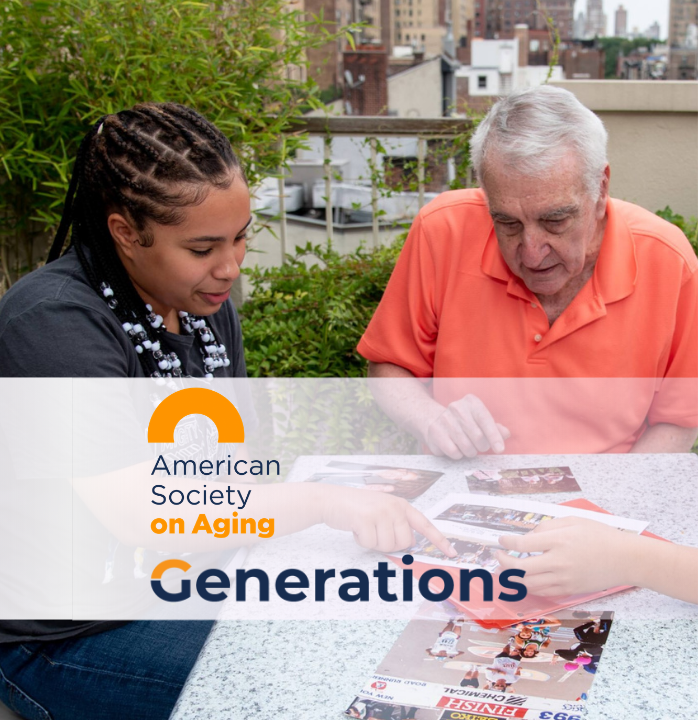
Writing in the American Society on Aging’s Generations Today, DOROT’s Judith Turner says that intergenerational connection is not just a program model—it’s a way of living with purpose, presence, and generosity. Judith is senior program officer for Volunteer Services and Intergenerational Programming. Read an excerpt below:
There’s a rhythm that runs through my life, an instinctive pulse toward human connection. One of my earliest memories of feeling its pull was at age 10. My mother was recovering from surgery, so our family went to a local diner for Thanksgiving. As I looked around, I saw older adults eating alone, people the age of my grandmother, and I became so upset I insisted my parents invite them all home with us. I cried; my younger siblings cried because I cried. Even then I sensed that no one should experience life alone.
That moment makes sense in retrospect: I was raised in a world where doors were open, neighbors flowed in and out, my grandmother lived with us, and my parents, with other local families, were building a new school from scratch. Community wasn’t an event; it was an ecosystem. That understanding has shaped everything I’ve done since.
My purpose, the throughline from childhood to my almost 25 years at DOROT, has been to create environments where people of different ages and backgrounds experience the fullness of one another’s humanity. I’ve always believed that generations are meant to live in relationship, not in isolation. What I didn’t know in that diner, I see clearly now; when we break down the walls that keep age groups apart, something essential returns to all of us.
At DOROT (Hebrew for “generations”), our mission is to address social isolation and loneliness among older adults by bringing generations together for mutual benefit. In 2025, DOROT served 6,697 older adults and engaged 8,215 volunteers of all ages who dedicated 49,225 hours of their time. A simple visit, a shared story, a piece of music, or even an hour or two of tech coaching can become a source of meaning for both older and younger participants. The exchange is reciprocal, a kind of “boomerang effect,” only in this case it’s a back and forth where wisdom and fresh perspective move from one person to the other.
Today, the need for social connection is profound. What once felt like a “nice” addition to community life has become a societal imperative. The pandemic made clear that loneliness is a shared experience across generations. My work is to design spaces where connection is not accidental but intentional, where people come away feeling less alone and more a part of something enduring.
It’s in these intentionally crafted spaces that stories unfold into moments when connection stops being an idea and becomes something you can see, hear, and feel taking shape between people.